
Global Report
Upgrading Europe.
Learn more
Local Report
They call me Bond. Government Bond.
Learn more
Market Indicators
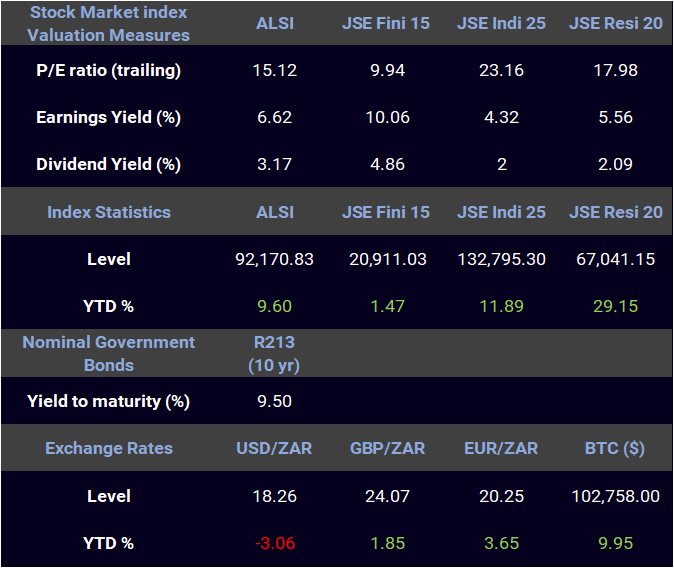
Global and Local Indicators.
Learn more
Global Report: Upgrading Europe.
By Nick Downing
Investors are questioning US exceptionalism and the continued outperformance of its financial markets. US stocks have underperformed the rest of the world since the start of the year by the widest margin since 1993. The catalyst for the underperformance is Trump’s trade policy shock, which is hurting the US economy more than its trading partners, evidenced by the impact on surging inflation expectations, rising Treasury bond yields, falling stock prices and a sharp dollar depreciation.
At the same time, Europe has made big stock market gains. The catalyst is the momentous policy shift in Germany, which contributes just under a third of eurozone GDP. There has been a seismic shift from Germany’s traditionally conservative and debt averse fiscal policy, with significant consequences for economic stimulus. The new coalition government has agreed to reform the so-called “debt brake,” the strict constitutional fiscal rule that prevents the government’s core budget deficit from exceeding 0.35% of GDP. Defence spending exceeding 1% of GDP will be exempt from the rule, as will a deficit financed fund for infrastructure worth €500 billion, equivalent to 12% of GDP.
Germany has suffered the longest economic slump in its postwar history, which together with increasingly isolationist policies in the US is prompting dramatic action. Germany is embarking on supply-side structural reforms, which like the US and UK in the 1980s under Ronald Reagan and Margaret Thatcher, could kick-start a prolonged period of improved growth. Newly elected Chancellor Friedrich Merz in his “whatever it takes” plan, has vowed to reinvigorate the economy with debt fuelled spending on infrastructure and defence, tax subsidies for investment, and deregulation. Economists are expecting as much as €1 trillion in additional domestic spending in the next decade, equal to well over a fifth of GDP. This is good news: The scale of reforms is large and focused on areas of strategic importance. The poor state of Germany’s infrastructure has been a key factor holding back its growth in recent years. Benefits will spill over into the rest of the eurozone through increased trade as well as more lenient views towards fiscal spending and supply-side reforms. This is likely to be a game changer not just for Germany but for Europe.
The eurozone is also enjoying a cyclical recovery. Economic data in the region has been surprising to the upside. The eurozone economy grew in the first quarter of the year by 0.4% quarter-on-quarter up from 0.2% in the prior quarter, outpacing the US for the first time in almost 3 years. The US economy contracted on an annualised basis by 0.3% while by the same metric the eurozone economy grew by 1.4%. Meanwhile, eurozone unemployment remained at record low levels, staying at 6.2%. A key challenge to the eurozone has been a reluctance by consumers to spend but the cyclical and structural recovery is boosting consumer confidence. Households have been abnormally cautious this decade, building up a €1 trillion stockpile in accumulated excess savings, which could be unleashed if the recent improvement in consumer confidence and retail sales volumes continues to build momentum. Like other developed economies, household spending comprises the bulk of the eurozone’s economy.
Over the short-term, Germany’s GDP growth will slow due to uncertainty over US trade policy. The IMF, in its latest projection, forecasts zero growth in 2025. Even a slight recession is possible but fiscal stimulus, massive increases in spending on defence and infrastructure, and increased investment and consumer spending could create a solid foundation for subsequent growth. Unlike the US, where trade tariffs are inflationary, in the eurozone, the trade war is disinflationary, provided, as seems likely, the eurozone does not retaliate. A stronger euro, the increase in Chinese imports and the recent drop in natural gas and oil prices, add to the region’s favourable inflation outlook. This paves the way for more interest rate cuts than expected. The ECB is on track to cut its benchmark interest rate from its current level of 2.25% to 1.5% by the end of the year. By contrast, the Federal Reserve will be hamstrung by rising inflation expectations. At its latest policy meeting the ECB cut its interest rate and Christine Lagarde said the central bank was on track to meet its inflation target “on a sustained basis.” At the Fed’s latest meeting, when rates were kept on hold (much to Trump’s frustration), Jerome Powell said he needed to “wait for greater clarity.”
Valuations in Europe are compelling. After years of investor scepticism towards the region, stock prices have become deeply discounted. Eurozone stocks trade at 25% cheaper than the global market on a relative price: earnings basis and 40% cheaper on a cyclically adjusted P/E basis, its widest discount in several decades. The valuation disparity seems at odds with the steadily improving profit margins and return on equity of key financial and industrial sectors. Moreover, the euro currency is cheap relative to the US dollar, undervalued by an estimated 20% according to various models, including real effective exchange rates and the purchasing power parity model, providing scope for further appreciation as the currency benefits from improving relative growth conditions, and a general exodus from the US dollar.
Markets have taken the view that the historic fiscal shift in Germany is a game changer for economic growth in both Germany and Europe. Structural reforms have finally arrived, combining with a cyclical upturn, rising company profitability, and massive household spending power. Cheap valuations and a pendulum swing away from US markets add to the likelihood of eurozone market outperformance. Overberg Asset Management has recently increased its global portfolio exposure to European stocks.
Local Report: They call me Bond. Government Bond.
By Sean Fitzpatrick
The current investment environment is full of question marks. The importance of maintaining a balanced portfolio has never been greater. Amid political uncertainty, subdued economic growth forecasts, and volatile equity markets, one traditional asset class is regaining attention: bonds. Despite often being viewed as second best in growth-oriented strategies, bonds (particularly local government bonds) are now offering compelling value both from a yield and a risk-adjusted return perspective.
A well-diversified investment portfolio is more than a theoretical ideal…It is a practical necessity. Asset classes respond differently to macroeconomic changes, and in today’s volatile world, that diversification provides critical downside protection. While equities remain vital for long-term capital growth, they also carry significant risk during economic slowdowns and geopolitical disruptions. Bonds, on the other hand, offer predictable income and capital preservation, especially during periods of elevated uncertainty. Recent meetings within the OAM investment committee have reinforced this sentiment. One of the central themes has been the rising attractiveness of South African government bonds. With real returns on offer and an ever-changing macroeconomic landscape, this is an ideal moment for investors to revisit their fixed income allocations.
Globally, economic confidence has weakened. The International Monetary Fund (IMF) has revised its 2025 global growth forecasts downward, citing persistent geopolitical tensions, trade disruptions, and slowing demand in major economies. Locally, South African growth is destined to experience a similar fate. GDP expectations have softened considerably, with institutions like Moody’s predicting growth around 1.5% for the year. Although an improvement after the disappointing 0.6% growth seen in 2024, it remains far below the levels needed to materially shift unemployment or living standards for the average South African. The lack of structural reform progress, continued energy insecurity, and weak municipal governance cast further doubt on the local outlook. Given the recent VAT saga and numerous sequels of the budget being tabled, policymakers are most likely to rein in spending, rather than boost it, offering little in terms of short-term stimulus. Yet, this low-growth, low-inflation environment presents an opportunity for bond investors.
Inflation in South Africa remains under control, with the latest CPI reading for March 2025 falling to 2.7%, well below the SARB’s 3%-6% target band. The latest data from Standard Bank Group (SBG) forecasts inflation to average 3.6% in 2025, trending toward the Reserve Bank’s midpoint target of 4.5% in subsequent years. With repo rates held at 7.5% and real interest rates among the highest in the G20, the environment is ripe for bond performance.
Increased bond yields this year, spurred by fiscal anxieties, market volatility, and global macro headwinds, have effectively repriced risk. For investors, this means the premium you earn for bearing sovereign and credit risk is already elevated. South African credit default swap (CDS) spreads indicate a considerable amount of risk is already priced into current yields. Investors are being compensated well for the level of risk they are taking on. Bonds are not only fairly valued in the South African market, they are also compelling. In an uncertain environment, locking in a fixed yield for a portion of your portfolio is a prudent strategy to follow. There’s also a degree of reassurance coming from Treasury itself. Budget discipline remains a priority, and interaction with GNU coalition partners points to a collective will to rein in spending. That is critical for bond investors who require confidence that fiscal deterioration will be kept at bay. Yields on 10-year government bonds currently hover near the 10.5% mark, while the Satrix GOVI ETF (widely used in our local portfolios) offers a yield just shy of 9%. Even in a scenario where inflation ticks up to 4.5%, real yields remain strongly in the black.
Given these dynamics, we have decided to increase bond allocations in local balanced and defensive portfolios. This isn’t a radical tilt, but rather a pragmatic adjustment to reflect the relative attractiveness of bonds today. Increasing model weights enhances income, improves portfolio resilience, and still leaves room for growth assets to play their part. In terms of implementation, ETFs like the Satrix GOVI offer efficient, cost-effective exposure. And thanks to the natural liquidity of South Africa’s bond market, a rare strength among emerging markets, rebalancing can be executed swiftly and transparently. It is also worth noting the equity side of our local portfolios retains substantial rand hedge exposure. That provides a counterbalance to any local economic-specific risk embedded in bonds, preserving the overall resilience of the portfolio.
As inflation remains subdued and Treasury continues to signal fiscal prudence, bond yields are unlikely to remain this attractive forever. A cut in the repo rate, which is still anticipated by some analysts, would likely result in a drop in yields and an increase in bond prices. In that sense, investors today are presented with a potential capital gain kicker in addition to attractive income. At the same time, a higher bond allocation acts as a stabilizer in portfolios increasingly subject to global and domestic shocks.
In the investment universe opportunities often arise when sentiment is mixed. Right now, South African bonds are misunderstood and undervalued. With current real yields greater than 6%, tight inflation expectations, and signs of fiscal constraint from government, the risk-reward profile is highly attractive.
Market Indicators
Make use of the many indicators below simply by clicking on each of the dropdown menus provided

Reference: Capital Economics – Historical bond and equity return data.
The Bottom Line: Innovation and the Magic of Compounding
By Carel La Cock
The oldest investment trust listed on the London Stock Exchange can trace its beginnings back to the surging demand for rubber at the advent of the car industry. Following the Panic of 1907 when the New York Stock Exchange fell nearly 50% from its peak, credit markets dried up and realising the opportunity to lend to rubber plantations in Asia, Colonel Augustus Baillie and Carlyle Gifford established The Straits Mortgage and Trust Company Limited that would ultimately become the behemoth: Scottish Mortgage Investment Trust (SMT), a constituent of the FTSE100.
Baillie Gifford & Co, the investment management company that stewards SMT, oversee total assets in the fund of £16.67bn as at the end of February 2022. Outgoing manager, James Anderson, defined his career with early investments in Amazon and Tesla, which propelled the fund to cumulative growth of 696.8% in the last 10-years, compared to 220.4% for its benchmark, the FTSE All-World Index. Anderson’s investment philosophy has always been based on the belief that technological improvements will drive innovation and that even picking a small number of these successful future companies and holding on to them long enough to let the magic of compounding work, will lead to exceptional returns for clients. Tom Slater, co-manager since 2015, will take over the reins at the end of April and believes that it matters less failing to sell the holdings you should sell, than selling the holdings you should not sell. When they go long on investments, they remain long offering support as patient investors often nurturing private holdings until they go public.
After a stellar performance in 2020 which saw net asset value (NAV) grow by 106.5%, 2021 was more subdued by its own standards, up only 13.2%. This year the share price has come under severe pressure from rising inflation and the rising interest rate used in discounting long duration income flows on many of the growth stocks in its portfolio. Moderna, the manufacturer of Covid-19 vaccines and the largest holding in the portfolio at 8% is down nearly a third year to date, while Tencent, the Chinese e-commerce giant, at 4% of the portfolio is down nearly a fifth this year. Others in the top five holdings: ASML (-13%), Illumina (-9.6%), Tesla (-13%) and NVIDIA (-10.4%) have all been downgraded due to expectations of a steepening yield curve.
Is now the time to panic and if not now, then when? Geopolitical risk is at an all-time high, the US federal reserve has just hiked interest rates for the first time since 2018 and global inflation is running rampant while oil and gas prices have spike on supply fears. However, listening to manager, Tom Slater and deputy manager, Lawrence Burns discuss the current environment and the outlook for the portfolio in a recent investor presentation, you don’t get the sense that now is the time to panic, or indeed ever. Their strategy is long-term, and they have positioned the fund to participate in structural changes and technological advances in society. They have incredible deal flow built on decades of strong relationships and a reputation for stability and patience. Entrepreneurs are keeping companies private for longer and having early access to investment in these opportunities often leads to extraordinary returns.
As for its current top holding, asked if Moderna is a “one-trick-pony” with reference to the major windfall from the Covid19 vaccine, but recently downgraded as investors see the end of the pandemic and the Covid-19 vaccine franchise, Lawrence answered “Moderna is a one trick pony, but that one trick is a broad and important one and that trick is mRNA.” The biotechnology behind the Covid-19 vaccine is a powerful one with programmes to cure zika, HIV, cancer and a range of other ailments making the recent windfall unlikely to be a once-off.
Regarding the tightening of regulation in the Chinese technology sector and its impact on Tencent, the team thinks that the Chinese government is ahead of the curve in terms of regulation and that democratic western nations will eventually implement similar regulatory changes. They believe that companies that “go with the grain of society” and who are aware of their broader impact on society will find it easier to prosper. In this regard, Chinese tech companies are further along the route of enlightenment.
Lastly, Tom Slater does not agree that higher inflation and rising interest rates should lead to lower valuations on growth stocks. He cautions investors to also consider the impact of pricing power on some of these high growth companies as they become market leaders in their field. Therefore, with higher expected future inflation, one should also adjust the future cash flows that will yield a better current valuation. Looking past the current volatility, the fund has invested in some ground-breaking technology and the managers are excited by the intersection of computing power and biology calling the opportunity set “large and varied” They have 49 investments in private companies, and it is not difficult to imagine the next Amazon and Tesla coming from that pool.
Invest Today
Spend some time with our team to find out which one of our portfolios is best for you!
